Income Tax

The Big Picture
Total Household Net Worth = $160 trillion
National Debt = $36 trillion
Gross Domestic Product = $29.3 trillion
Taxes/GDP = 17%
Annual National Budget = $6.8 trillion
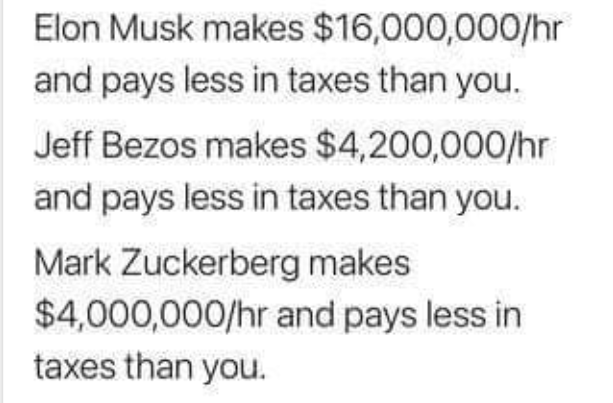
Salaries are for Suckers
U.S. Income Tax History and Wealth Distribution
ChatGPT Summary
The U.S. federal income tax began as a temporary measure during the Civil War and became permanent after the 16th Amendment was ratified in 1913. Initially modest, income tax rates surged during World War I and II, especially under FDR, when taxation became highly progressive and widely applied.
In the postwar period, top marginal rates exceeded 90%, supporting robust government programs and a more equal wealth distribution. However, from the 1980s onward—especially under President Reagan—top tax rates were significantly cut, marking a shift away from progressive taxation. These changes coincided with rising income and wealth inequality.
Progressive taxation, which imposes higher rates on higher incomes, has historically helped reduce inequality by funding public goods and redistributing wealth. While the U.S. tax code remains nominally progressive, effective tax rates on the wealthy have declined due to lower capital gains taxes, loopholes, and policy changes.
Recent debates focus on restoring progressivity to combat inequality, with proposals including higher top rates and wealth taxes.
Back to national debt
Back to logarithmic wealth.